
Nature2def03b1…da0d
Die Schlade
A dry valley rich in natural diversity
Checking in counts toward these achievements:
First Steps10 pts
City Explorer25 pts
Urban Adventurer50 pts
The Schlade Nature Reserve stretches as a dry valley from west to east in the Schlade district of Bergisch Gladbach. Established in 1971, it features a unique landscape on the edge of the Paffrath limestone basin. It is bordered by the districts of Grube and Kley to the north and Rommerscheid to the south.
Guided Story
You find yourself at the Schlade Nature Reserve, a dry valley stretching from west to east. Established in 1971, this area offers a unique landscape at the edge of the Paffrath limestone basin. To the north, it is bordered by the districts of Grube and Kley, with Rommerscheid to the south. The diverse flora and fauna thrive in this distinct environment, offering plenty to explore. You might hear the gentle rustling of leaves or the calls of birds that call this place home. It's a perfect spot to take a moment and connect with nature.
Did you know?
The nature reserve was established in 1971.
Part of These Trails
Post-War Bergisch GladbachStop 2 of 6
Location
Nearby

St. Engelbert
528 m away

Strundetal
813 m away

Max-Bruch-Denkmal
1.1 km away

Heilige Drei Könige
1.2 km away

Kunstmuseum Villa Zanders
1.8 km away
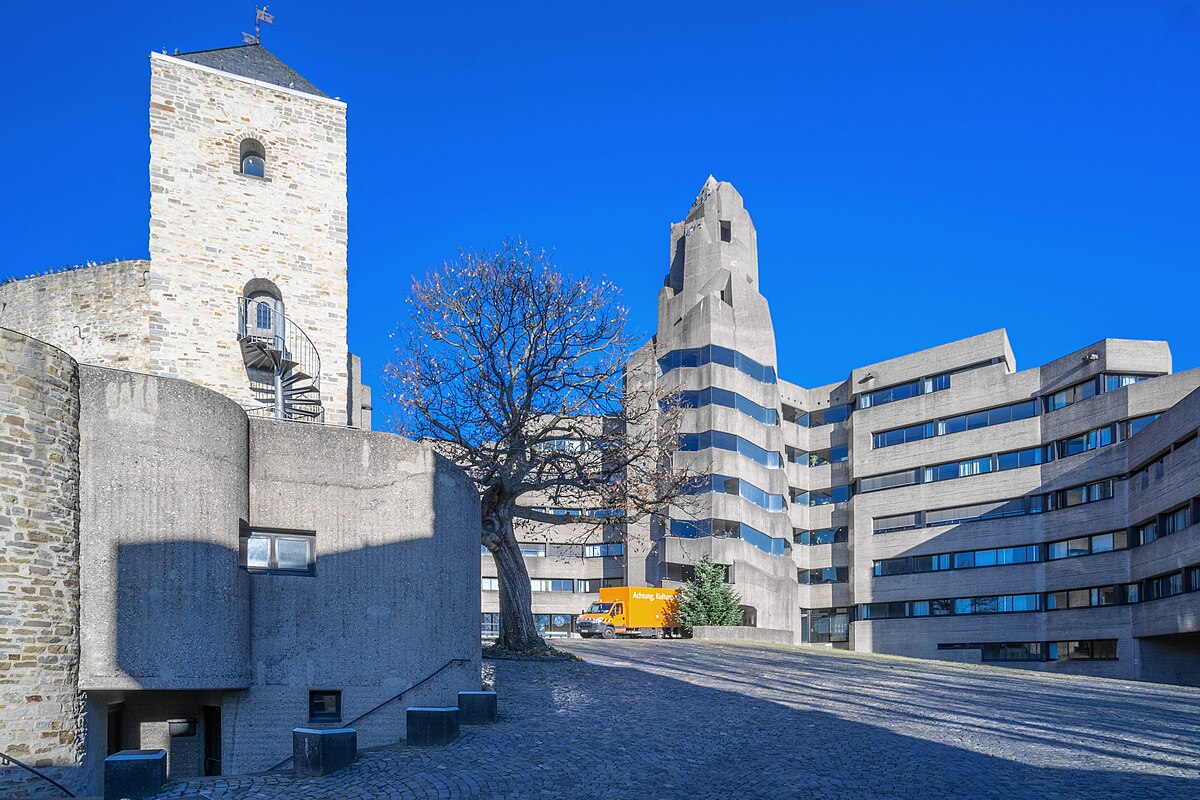
LVR-Industriemuseum Papiermühle Alte Dombach
932 m away

Rathaus Bergisch Gladbach
1.7 km away

Gnadenkirche
1.5 km away
Image credits
- Die Schlade (header image): © Pingsjong (GFDL) · Wikimedia Commons
- St. Engelbert: © Pingsjong (GFDL) · Wikimedia Commons
- Strundetal: © Pingsjong (GFDL) · Wikimedia Commons
- Max-Bruch-Denkmal: © Pingsjong (GFDL) · Wikimedia Commons
- Heilige Drei Könige: © Frank Vincentz (CC BY-SA 3.0) · Wikimedia Commons
- Kunstmuseum Villa Zanders: © Frank Vincentz (CC BY-SA 3.0) · Wikimedia Commons
- LVR-Industriemuseum Papiermühle Alte Dombach: © Kameister (CC BY-SA 4.0) · Wikimedia Commons
- Rathaus Bergisch Gladbach: © Frank Vincentz (CC BY-SA 3.0) · Wikimedia Commons
- Gnadenkirche: © Frank Vincentz (CC BY-SA 3.0) · Wikimedia Commons