
Place of worshipArchitectural Heritage Monumenta7711f2b…db27
St. Anna
Brick Expressionism in Sacred Architecture
Checking in counts toward these achievements:
Bochum: First Steps10 pts
Bochum: Explorer25 pts
Bochum: Insider50 pts
Built in 1929, St. Anna Church in Bochum-Goldhamme showcases the vibrant Brick Expressionism of the Ruhr area. Its architecture evokes industrial factory design, blending creativity with sacred construction. The church is recognized as an architectural heritage monument in North Rhine-Westphalia.
Guided Story
As you stand before the church, take a moment to admire the striking brickwork of St. Anna. Built in 1929, this church is a testament to the Brick Expressionism that thrived in the Ruhr area. Its design echoes the industrial factory architecture, a creative fusion of industry and sacred space. As a Roman Catholic church, it is dedicated to St. Anne. It stands not only as a place of worship but also as an architectural heritage monument in North Rhine-Westphalia. While you observe the intricate details of the façade, imagine the bustling industrial life of the region reflected in this unique architectural style.
Did you know?
The church is dedicated to St. Anne.
Location
Nearby

ThyssenKrupp-Hochhaus
281 m away
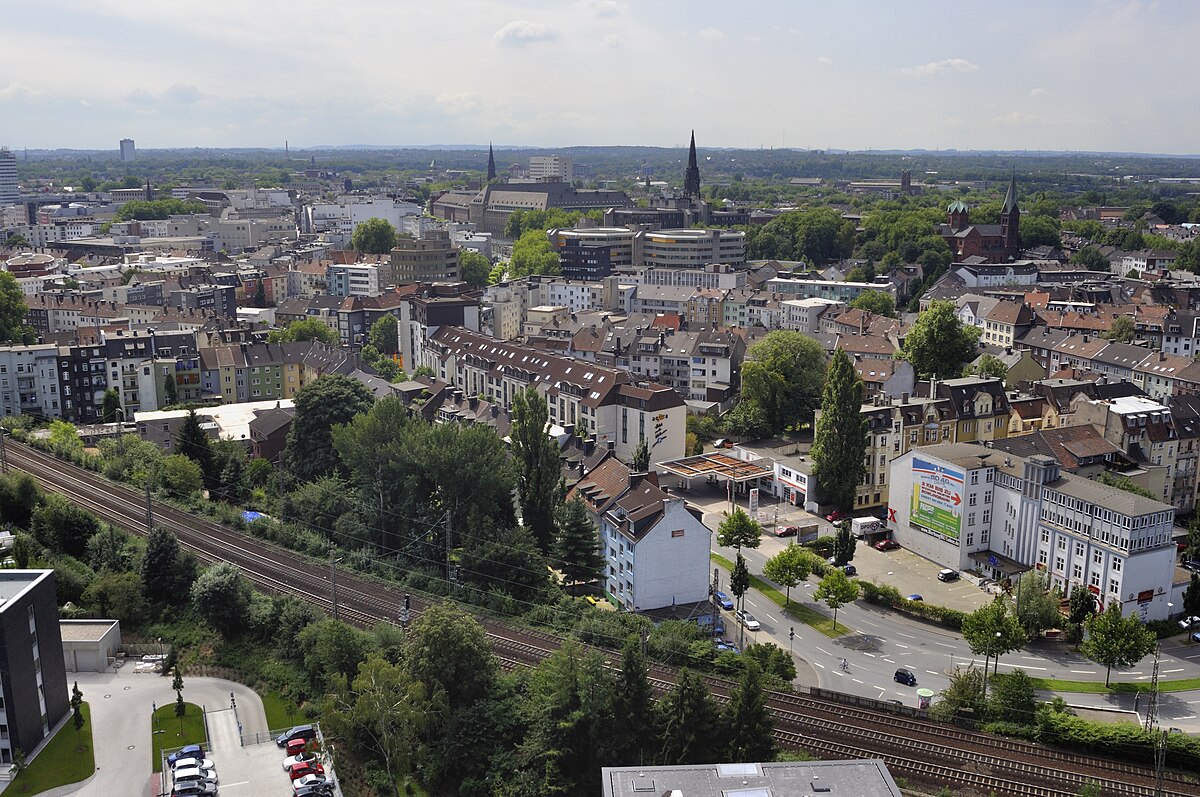
Evangelisch-Freikirchliche Gemeinde
88 m away
Gemeinschaftsgarten Vereinsstraße
144 m away

Jahrhunderthalle
705 m away
Jochen-Klepper-Haus
215 m away

Josef-Anton-Gera-Platz
637 m away

Westpark
753 m away

Friedenskapelle im Q1
825 m away
Image credits
- St. Anna (header image): © Heinrich Kämpchen (CC BY-SA 4.0) · Wikimedia Commons
- ThyssenKrupp-Hochhaus: © Cschirp (CC BY-SA 3.0 DE) · Wikimedia Commons
- Evangelisch-Freikirchliche Gemeinde: © DerHexer (CC BY-SA 3.0) · Wikimedia Commons
- Jahrhunderthalle: © The original uploader was Stahlkocher at German Wikipedia. (CC BY-SA 3.0) · Wikimedia Commons
- Josef-Anton-Gera-Platz: © Heinrich Kämpchen (CC BY-SA 4.0) · Wikimedia Commons
- Westpark: © Frank Vincentz (CC BY-SA 3.0) · Wikimedia Commons
- Friedenskapelle im Q1: © Frank Vincentz (CC BY-SA 3.0) · Wikimedia Commons