
Nature602efda9…5a0c
Römersprudel
Ancient spring with Roman roots
Public access to this place is restricted. You can explore its story here, but check-in is unavailable.
Access information: OpenStreetMapChecking in counts toward these achievements:
Trier: First Steps10 pts
Trier: Explorer25 pts
Trier: Insider50 pts
Known for its high carbon dioxide and low mineral content, the Römersprudel served as a mineral spring since Roman times. Once economically utilized, the spring is now in a state of disrepair and not open to the public. Its waters flow into the Moselle via the Kobenbach.
Guided Story
Picture yourself at a site with deep historical roots. The Römersprudel, known since Roman times, was once a significant mineral spring. Although it's no longer accessible, it was a vital resource for locals with its carbon dioxide-rich water. This water continues to flow into the Moselle via the Kobenbach. It's a subtle yet intriguing part of the landscape, blending nature with history. Imagine the journey the water takes to finally join the Moselle.
Did you know?
The spring was economically used until 1977.
Location
Nearby

Mattheiser Wald
1.4 km away

Schloss Monaise
2.1 km away

Sankt Valerius
1.8 km away

St. Matthias
2.8 km away

Südbad Trier
2.2 km away

Eröffnung der Staustufe
1.9 km away
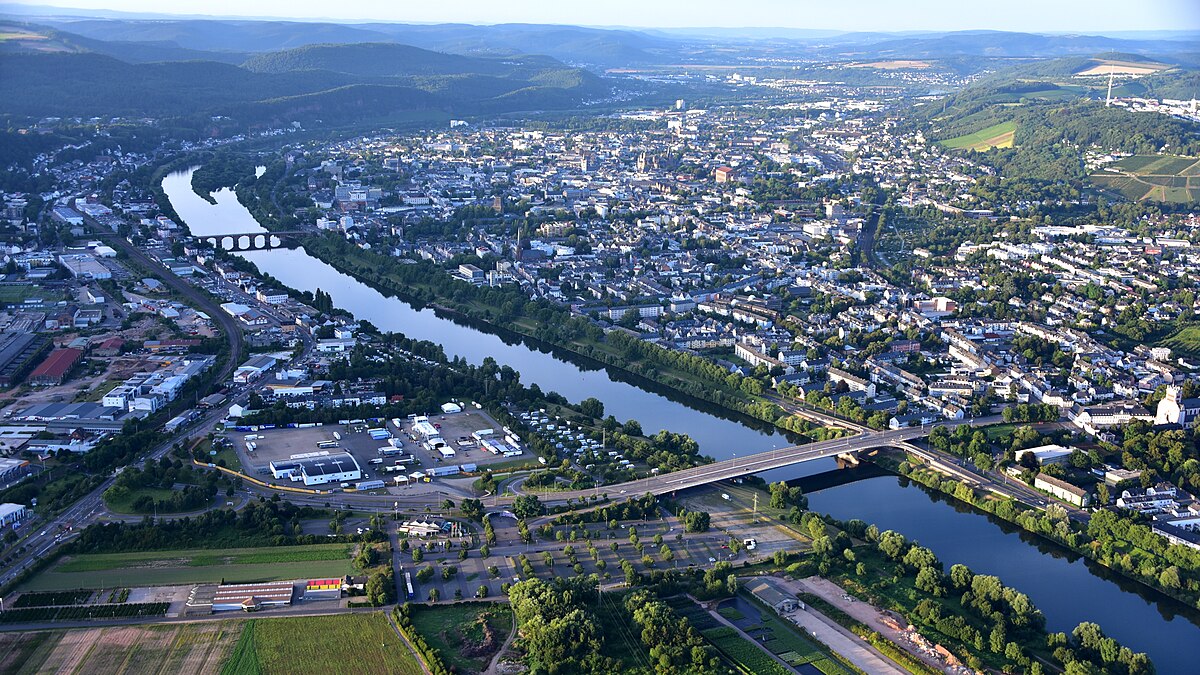
St. German ad undas
1.7 km away

Konrad-Adenauer-Brücke
2.9 km away
Image credits
- Römersprudel (header image): © P170 (CC BY-SA 4.0) · Wikimedia Commons
- Mattheiser Wald: Photo: Helge Klaus Rieder (CC0) · Wikimedia Commons
- Schloss Monaise: © Berthold Werner (CC BY-SA 3.0) · Wikimedia Commons
- Sankt Valerius: © P170 (CC BY-SA 4.0) · Wikimedia Commons
- Südbad Trier: © Palauenc05 (CC BY-SA 4.0) · Wikimedia Commons
- Eröffnung der Staustufe: © Andy Dufresne & Red (CC BY-SA 4.0) · Wikimedia Commons
- St. German ad undas: © Wolkenkratzer (CC BY-SA 4.0) · Wikimedia Commons
- Konrad-Adenauer-Brücke: © Stefan Kühn (CC BY-SA 3.0) · Wikimedia Commons